After years of trying to maximize productivity in nearly every aspect of daily life, travelers appear increasingly interested in a different approach to vacations: doing less.
The "Unproductive Vacation" emerges as a travel trend for 2027
A growing number of travelers are seeking fewer schedules, less planning and more time to relax, according to a survey of campers in the United States and Canada
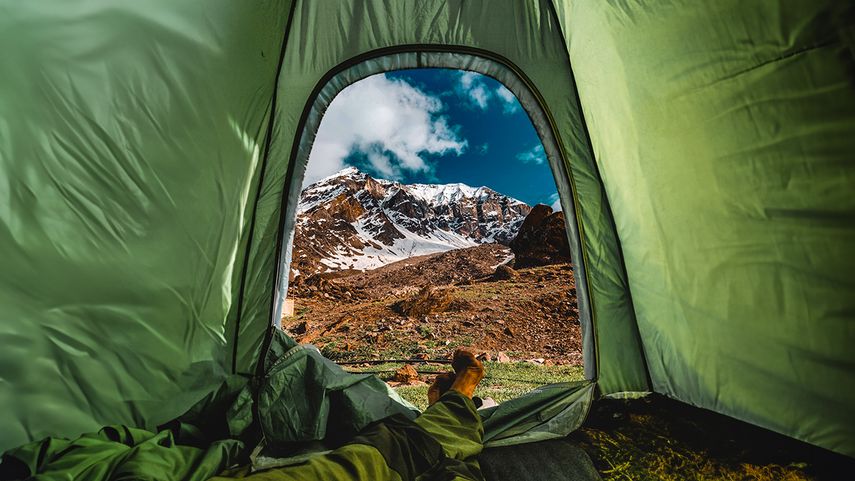
Camping.
Roaming Revolution / PixabayThe so-called Unproductive Vacation is emerging as a defining outdoor travel trend for 2027, reflecting a shift toward trips with fewer scheduled activities, less logistical planning and more time to enjoy the destination without feeling obligated to accomplish something.
The concept goes beyond slow travel or simply reducing the number of attractions on an itinerary. It involves removing much of the work associated with modern vacations, including extensive research before departure, coordinating reservations, moving between attractions and trying to make every moment count.
According to Campspot's 2027 Outdoor Travel Trend Report, based on a survey of 2,521 campers in the United States and Canada, 73% of respondents feel pressure to optimize or make the most of every part of their lives, while 60% feel overwhelmed by their everyday responsibilities.
That pressure extends to travel. More than half of those surveyed (52%) said planning and coordinating a vacation can feel like work, and 75% have returned from a traditional vacation feeling as though they needed another vacation.
The findings also suggest that travelers are reconsidering what makes a trip worthwhile. Seven in 10 respondents (71%) would rather miss a few attractions and return home rested than see everything and come back exhausted.
“Travelers are telling us that the work of vacation now starts long before they leave home,” said Jeff Bettin, general manager of marketplace at Campspot. He noted that researching, comparing and coordinating travel arrangements can turn time off into another project.
A different definition of a successful vacation
The survey indicates that personal connections and spontaneous experiences are becoming more important than traditional sightseeing checklists.
When asked what makes a vacation successful, 74% selected spending quality time with people they care about, while 66% pointed to memorable, spontaneous moments. Only 28% identified visiting major attractions or must-see landmarks as a priority.
Travelers also appear increasingly comfortable leaving their schedules open. Some 88% said a vacation in 2027 without a formal itinerary or scheduled activities appeals to them, while 80% intentionally leave at least one full day unplanned during some trips.
Furthermore, 65% said their favorite vacation memories often come from experiences they did not organize in advance.
Camping offers an opportunity to slow down
Camping is particularly well positioned to benefit from this shift because it allows travelers to remain in one place rather than continually moving between hotels, attractions and activities.
Among those surveyed, 84% said they would likely spend an entire vacation day at a campground without leaving in 2027. Seven in 10 also believe camping gives them greater freedom to do nothing without feeling that their vacation has been wasted.
The experience can also reduce the number of decisions travelers must make. Some 58% said they make fewer decisions after arriving at a campsite than during other types of vacations, while 68% find it easier to let the day unfold without a schedule.
An equal percentage said simple activities feel sufficient more often when camping. Meanwhile, 66% believe a completely obligation-free day outdoors would leave them feeling more restored than a scheduled spa or wellness day.
The survey also identified differences between men and women. Nearly two-thirds of female campers (63%) said they make fewer decisions after arriving at a campsite, compared with 52% of men. Women were also more likely to report feeling overwhelmed by everyday responsibilities, at 67%, compared with 51% of male respondents.
For families, the opportunity to remain in one place can be particularly valuable. Among respondents who typically camp with children under 18, 71% said they still feel responsible for managing everyone else's vacation.
Nevertheless, 80% said they are more patient when they do not have to move their families from one place to another, while 79% believe campgrounds offering activities and amenities on-site make it easier to relax.
Three approaches to doing less
Campspot identifies three forms of the Unproductive Vacation, each designed to reduce a different aspect of travel planning.
The first, called the Campground Cocoon, involves selecting a campground with sufficient amenities, activities, food and access to nature to make leaving unnecessary. Nearly seven in 10 respondents (69%) said they would likely take this type of trip in 2027, rising to 86% among families who camp. In addition, 66% have already spent nearly an entire camping vacation at the campground, with few or no plans outside the property.
The second approach, Site-Seeing, turns the campsite itself into the main attraction. Rather than choosing a destination based on nearby landmarks and activities, travelers seek scenic locations where the natural surroundings provide the primary experience.
Some 93% said they would likely take this type of vacation in 2027. Waterfront locations are especially popular, with 78% favoring lakefront, oceanfront or beach settings. Forests and mountains followed at 65%, while riverfront locations attracted 62%.
The third option, Repeat Retreat, involves returning to a familiar campground, region or even the same campsite instead of researching an entirely new destination.
According to the survey, 92% would likely consider this approach in 2027, while 83% have already returned to a familiar camping destination partly because it made planning easier. For 77% of respondents, knowing the campground's layout, campsite and surrounding area was the main advantage.
The findings suggest that the appeal of outdoor travel may increasingly depend on simplicity rather than the number of activities available. Campgrounds offering swimming pools, waterparks, restaurants, entertainment, waterfront access and organized activities can provide families with opportunities to enjoy their time together without having to organize excursions elsewhere.
For travelers accustomed to filling every vacation day with activities, the emerging trend offers a different proposition: spending more time in one place, making fewer decisions and returning home feeling rested rather than exhausted.
The complete 2027 Outdoor Travel Trend Report is available at Campspot's website.
The survey was conducted by Campspot in late summer 2026 among 2,521 campers in the United States and Canada. Percentages were rounded to the nearest whole number.
NULL
Deja tu comentario
Te puede interesar
DíA DE LOS VETERANOS
Por
Leonardo Morales Trump resalta la imperiosa necesidad de la guerra al terrorismo de Irán
¿ALIVIO?
Por
Julián Varela Congresistas demócratas de origen hispano proponen un acuerdo con Trump para una reforma migratoria
EEUU
Por
Valeria Montero Congresista Giménez exige protección a María Corina Machado ante amenazas de muerte
TERRENOS PÚBLICOS
Por
CARLOS ARMANDO CABRERA Contrato del Seaquarium de Miami-Dade queda en espera entre reclamos de revisión pública
PROTECCIÓN TEMPORAL
Por
CÉSAR MENÉNDEZ