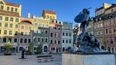
Here, visitors encounter many of the elements that make Poland distinctive: history, architecture, hospitality, entertainment, modernity, gastronomy, and beaches.
Gdansk
Gdansk is the largest of the three Tri-City communities and one of Poland's most important international destinations.
It was at Westerplatte, a peninsula on the outskirts of the city, where Nazi Germany's attack on Poland on Sept. 1, 1939, marked the beginning of World War II. Nearly four decades later, the Gdansk Shipyard became the birthplace of the Solidarity movement, which eventually contributed to the collapse of communist rule in Poland and the broader transformation of Central and Eastern Europe.
Today, Gdansk is best known for its historic center, colorful townhouses, and waterfront areas. Its architecture combines Gothic brick buildings, ornate merchant houses and modern museums dedicated to some of the most notable events in Poland's contemporary history.
The city is also known as the world's Amber Capital, reflecting its centuries-old connection to the Baltic's distinctive golden gemstone.
A stroll along the Royal Way, particularly Dluga Street and Dlugi Targ, reveals some of the city's most recognizable architecture. The route is lined with colorful merchant houses, many influenced by the architecture of northern Europe, as well as landmarks such as Neptune's Fountain and the Main Town Hall.
Along the Motlawa River, the waterfront promenade comes alive with restaurants, cafés, and visitors. The historic Zuraw, or Medieval Crane, recalls the era when Gdansk was one of the major ports on the Baltic Sea.
The Basilica of St. Mary is another landmark. Considered one of the largest brick churches in the world, the immense Gothic structure dominates the city's skyline. Visitors willing to climb more than 400 steps can reach the tower and enjoy panoramic views across Gdansk and the surrounding area.
Mariacka Street is among the city's most picturesque thoroughfares. Its distinctive architecture, stone terraces and amber shops reflect Gdansk’s long relationship with the gemstone that has been traded along the Baltic coast for centuries.
The historic Gdansk Shipyard provides a quite different atmosphere. Industrial structures and remnants of the city's shipbuilding past stand alongside the stunning European Solidarity Centre, where exhibitions document the history of the Solidarity movement and its role in Poland's peaceful transition from communist rule.
Nearby, the AmberSky Ferris wheel rises about 60 meters above the city, offering another perspective of Gdansk and the Motlawa waterfront.
Gdynia
Gdynia is the youngest of the three Tri-City communities. It grew rapidly during the 1920s, transforming from a small fishing village into a modern Baltic port and city during Poland's interwar period.
The ambitious development of Gdynia became a symbol of the newly independent Polish state and gave the city a distinctive modernist character.
The Southern Pier and Kosciuszko Square form the heart of Gdynia's waterfront. From here, visitors can explore the maritime heritage of the city, enjoy restaurants and cafés, and visit historic vessels.
Among them are the ORP Blyskawica, a historic destroyer and one of the oldest surviving destroyers in the world, and the Dar Pomorza, a three-masted sailing ship that has become one of Gdynia's best-known symbols.
The city also offers some of the Tri-City's most accessible beaches and a long waterfront promenade.
The Emigration Museum, housed in the former Maritime Station, presents the history of Polish emigration and the experiences of millions of Poles who left their homeland for destinations around the world.
Gdynia's modernist architecture is another defining feature of the city, reflecting its rapid development between the two world wars.
Sopot
Between historic Gdansk and maritime Gdynia lies Sopot, the Tri-City's best-known seaside resort. Here you find a refreshing coastal escape where you can immerse yourself in nature, safely away from the sweltering heat of typical summer destinations.
Sopot has attracted visitors, artists, and prominent figures since the 19th century, when it developed into a fashionable resort along the Baltic coast.
If Gdansk evokes history and Gdynia reflects Poland's maritime and modernist ambitions, Sopot is associated with beaches, wellness, entertainment, and a relaxed coastal atmosphere.
The city is compact and easy to explore on foot, with elegant villas, historic hotels, cafés, and restaurants along its streets.
Its most famous landmark is the wooden pier, or Molo, extending into the Baltic Sea. The structure offers views of the coastline and has long been one of Sopot's defining attractions.
Music is also an important part of the city's identity. The Sopot International Song Festival has been held at the Forest Opera, or Opera Lena, since the early 1960s, establishing Sopot as one of Poland's best-known entertainment destinations.
The festival has featured performers from Poland and numerous countries over the decades, contributing to Sopot's reputation as a cultural and musical center on the Baltic.
For additional information about the region, travelers can visit the official Pomorskie tourism website and the Polish National Tourist Office.
Gastronomy
The Tri-City also offers a dynamic culinary scene that combines contemporary cuisine with the traditions of northern Poland.
Traditional Polish cooking relies on ingredients such as pork, beef, potatoes, cabbage, mushrooms, and aromatic herbs. Fermented foods and ingredients add a distinctive tang to many dishes.
Visitors can discover familiar Polish classics such as pierogi, stuffed dumplings served in numerous varieties, as well as hearty soups, meat dishes, potato preparations, and pastries associated with regional and seasonal traditions.
Along the Baltic coast, seafood also plays a key role, while Gdansk’s historic relationship with amber and the sea is reflected in many aspects of its cultural identity.
For travelers, exploring the region's restaurants and cafés provides another way to understand the traditions and influences that have shaped the Tri-City.
How to get there
Gdansk Lech Walsa Airport (GDN) connects the region with Warsaw and numerous European destinations.
Travelers from the United States can also reach Poland through Warsaw, with LOT Polish Airlines and other carriers offering connections between Poland and several major U.S. cities, including Miami, New York, Newark, Chicago, and Los Angeles.
U.S. citizens do not need a visa for tourist stays of up to 90 days within the Schengen Area. Travelers using passports from other countries should verify current entry requirements with the appropriate Polish consular authorities before departure.
For travelers already in Europe or visiting other parts of Poland, rail service is often a convenient way to reach the Tri-City. Gdansk Glowny, the city's principal railway station, is located close to the historic center.
How to move around the Tri-City
Gdansk, Sopot and Gdynia stretch along the Baltic coast in a straight corridor, making it easy to travel between them.
An integrated transportation network of trains, buses and other public transportation connects the three cities. The SKM commuter railway is particularly useful for travelers moving between Gdansk, Sopot, and Gdynia.
The short distances make it possible to stay in one city and explore the other two during the same trip.
Time to visit
Spring and fall can offer a combination of milder weather and fewer visitors, while summer, from June through August, is the busiest season along the Baltic coast and the most popular time for beach activities.
Winter brings colder temperatures and, at times, snow, but the historic cities and Baltic shoreline take on a distinctive character during the quieter season.
Language
Polish is the official language. English is widely spoken in hotels, restaurants, tourist attractions, and other areas frequented by international visitors.
Where to stay
The Tri-City offers accommodation for a range of budgets, from luxury and historic hotels to boutique properties, hostels, and apartments.
Travelers can choose to stay in any of the three cities depending on their interests. Gdansk is particularly convenient for exploring historic sites, Sopot is well suited to those seeking a beach-resort atmosphere, while Gdynia offers a more modern and maritime setting.
Poland also remains affordable compared with many Western European destinations, although prices vary depending on the season, location, and type of accommodation.
Currency
Although Poland is a member of the European Union, the country's official currency remains the zloty (PLN), which is divided into 100 groszy.
Credit and debit cards are widely accepted, while ATMs are readily available in the Tri-City. Travelers should check with their banks regarding foreign-transaction and currency-conversion fees before traveling.