Ancient Olympia is more than an archaeological site in Greece. It is the place where ancient Olympic competitions, religion and mythology converged, giving the world one of its most enduring traditions.
sábado 19
de
septiembre 2026


A remarkable archaeological sanctuary where athletics, ancient religion, mythology, monumental temples, legendary figures, and enduring cultural heritage converge
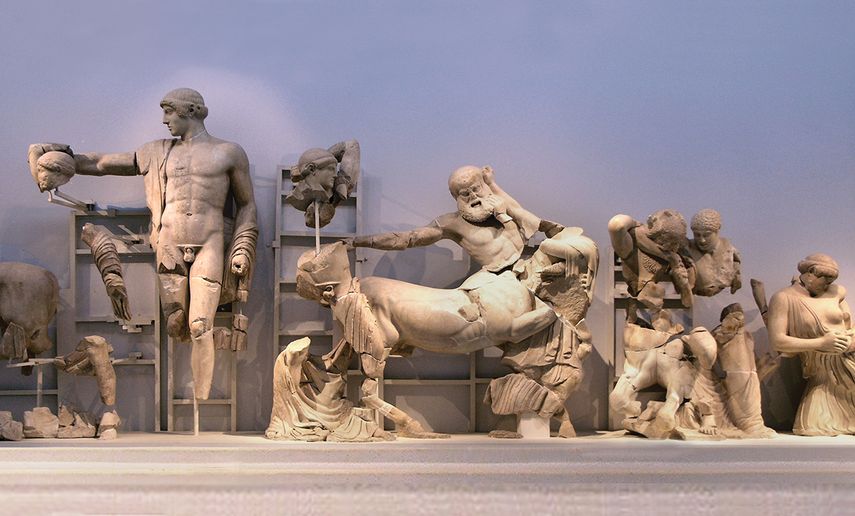
Elementos de la fachada del templo de Zeus, en Olimpia, Grecia.
JESÚS HERNÁNDEZ / DLA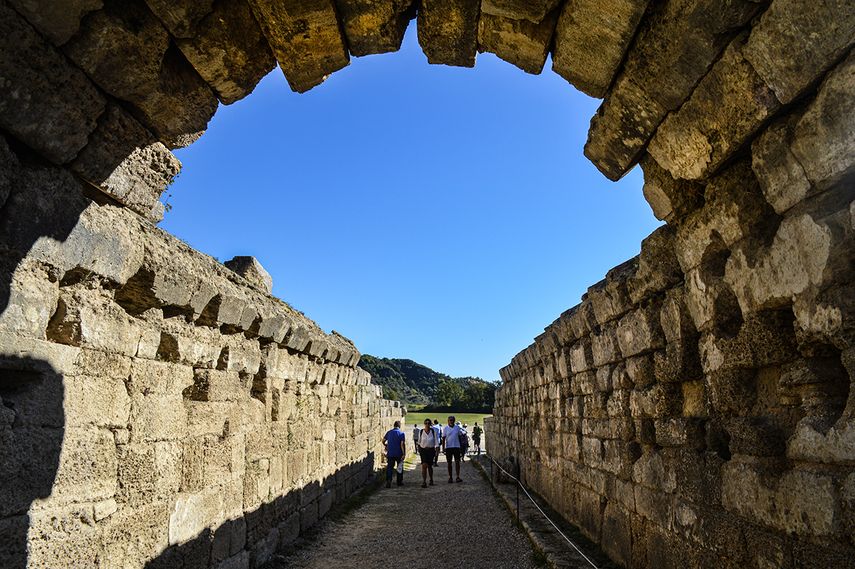
Entrada al antiguo estadio olímpico, en Olimpia, Grecia.
JESÚS HERNÁNDEZ / DLA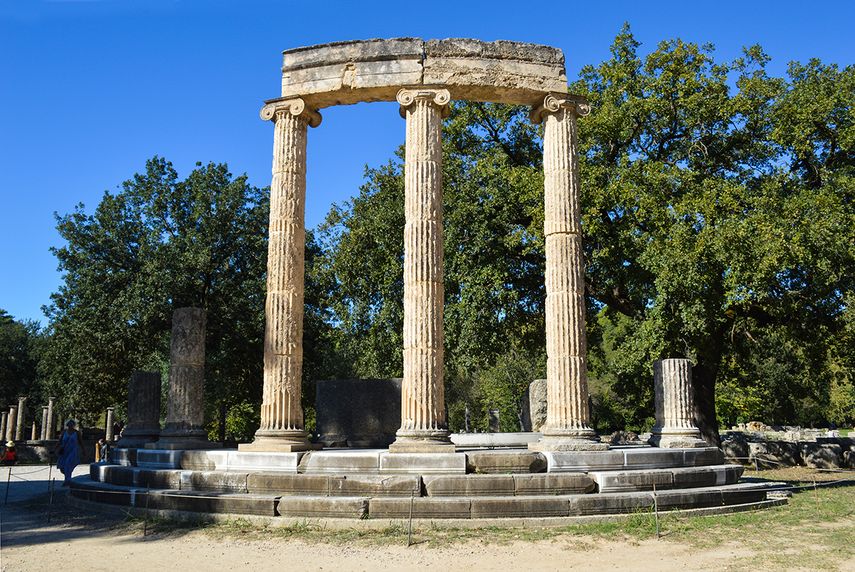
Restos del monumento circular, en Olimpia, Grecia.
JESÚS HERNÁNDEZ / DLA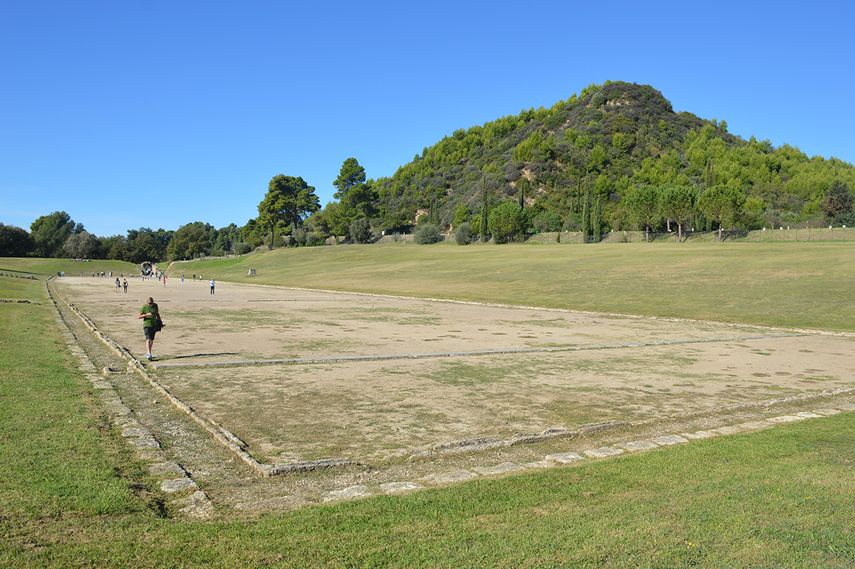
Vista parcial del campo de competiciones.
JESÚS HERNÁNDEZ / DLA

El Museo Arqueológico de Olimpia alberga algunos de los hallazgos más importantes de la zona, Grecia.

Apolo, del frontón occidental del templo de Zeus, Olimpia, Grecia.
JESÚS HERNÁNDEZ / DLA
Fragmentos del frontón occidental del templo de Zeus, Olimpia, Grecia.
JESÚS HERNÁNDEZ / DLA
Ilustración, antigua Olimpia, Grecia
Gemini
Olimpia, Grecia.
JESÚS HERNÁNDEZ / DLA
Antiguo Estadio, Olimpia, Grecia.
![Pedestal estatua, la inscripción lee Marco, hijo de Deidas, antioqueno de Dafne, habiendo ganado la lucha de muchachos en la 219.ª Olimpiada, [dedica esto] a Zeus Olímpico, Olimpia, Grecia.](https://media.diariolasamericas.com/p/296e0184a9c60afe81c603f818c0d324/adjuntos/216/imagenes/100/280/0100280262/855x0/smart/olimpia-grecia.JPG)
Pedestal estatua, la inscripción lee "Marco, hijo de Deidas, antioqueno de Dafne, habiendo ganado la lucha de muchachos en la 219.ª Olimpiada, [dedica esto] a Zeus Olímpico", Olimpia, Grecia.
JESÚS HERNÁNDEZ / DLA
El Philippeion, monumento distintivo dentro del Altis, Olimpia, Grecia.
JESÚS HERNÁNDEZ / DLA
Ruinas Palaestra, Olimpia, Grecia.
JESÚS HERNÁNDEZ / DLA
Ilustración, antigua Olimpia, Grecia
Gemini
Ruinas Templo de Zeus, Olimpia, Grecia.

Ruinas del Templo de Hera, o Heraion, Olimpia, Grecia.
JESÚS HERNÁNDEZ / DLA
Acceso de piedra al antiguo estadio, Olimpia, Grecia.
JESÚS HERNÁNDEZ / DLA
Ilustración, antigua Olimpia, Grecia
Gemini
Ruinas Templo de Zeus, Olimpia, Grecia.
JESÚS HERNÁNDEZ / DLA
Camino al antiguo estadio, Olimpia, Grecia.
JESÚS HERNÁNDEZ / DLA
Entrada al antiguo estadio, Olimpia, Grecia.
JESÚS HERNÁNDEZ / DLA
Busto de bronce conocido como sphyrélaton, 590-580 a.C., Olimpia, Grecia.
JESÚS HERNÁNDEZ / DLA
Olimpia hoy, Grecia.
JESÚS HERNÁNDEZ / DLA
Olimpia hoy, Grecia.
JESÚS HERNÁNDEZ / DLA
Fachada Iglesia de la Santa Asunción de la Virgen María, Olimpia, Grecia.
JESÚS HERNÁNDEZ / DLA
Vista interior de Iglesia de la Santa Asunción de la Virgen María, Olimpia, Grecia.
JESÚS HERNÁNDEZ / DLA
Capitel corintio, Olimpia, Grecia.
JESÚS HERNÁNDEZ / DLA
Escultura romana del emperador Adriano, Olimpia, Grecia.
JESÚS HERNÁNDEZ / DLA
Ancient Olympia is more than an archaeological site in Greece. It is the place where ancient Olympic competitions, religion and mythology converged, giving the world one of its most enduring traditions.

Located in the peaceful valley formed by the Alfeios and Kladeos rivers in the Peloponnese, Olympia was one of the most important Panhellenic religious sanctuaries of ancient Greece, dedicated primarily to Zeus. It is recognized today as a UNESCO World Heritage site.
Despite sharing its name with Greece's most famous mountain, Olympia is in southern Greece, in the historic region of Elis, and is entirely separate from Mount Olympus, which lies much farther north.
The landscape surrounding Olympia adds to the experience. The fertile valley is framed by gentle hills and riverbanks, with groves of olive trees creating a tranquil setting where birds sing and the sound of the wind contrast with the grandeur of the ancient sanctuary.
At the center of ancient Olympia is the Altis, the sacred precinct containing the principal temples, monuments and other structures associated with the sanctuary. Here, religion and athletics were closely intertwined, attracting pilgrims, athletes and visitors from across the Greek world.
The Remains
The Temple of Zeus was the sanctuary's most imposing structure and once housed the colossal gold-and-ivory Statue of Zeus by the sculptor Phidias, considered one of the Seven Wonders of the Ancient World.
Built between approximately 470 and 457 BC, the temple represented the mature Classical Greek Doric style. Its pediments contained 42 sculpted figures, important examples of early Classical Greek sculpture.
Not far from the temples is the Ancient Stadium, where visitors can still pass through the stone entrance tunnel and walk onto the original track. The Olympic competitions were traditionally dated to 776 BC, although the sanctuary and athletic contests developed over a much longer period.
The stadium is an impressive, elongated rectangle of packed earth, approximately 212 meters long and 32 meters wide. The distance between the starting and finishing lines is 192.28 meters.
According to ancient tradition, this distance was established by Heracles, son of Zeus and the mortal woman Alcmene, who supposedly measured 600 of his own feet. The measurement gave rise to the ancient Greek term stadion, originally a unit of distance that eventually came to describe the athletic track itself.
There were no rows of permanent stone or marble seats for the spectators. Instead, people generally sat directly on the ground or on the natural embankments surrounding the track. The stadium could accommodate an estimated 30,000 to 40,000 spectators.
The judges occupied a stone platform on the southern side, while the altar of Demeter Chamyne, goddess of agriculture and fertility, was located on the northern side. The priestess of Demeter was traditionally the only woman permitted to attend the Games.
A short walk away stands the Temple of Hera, or Heraion, one of the oldest temples in the sanctuary. Dedicated to Hera, queen of the Greek gods and wife of Zeus, it has a continuing connection with the Olympic tradition.
Today, the Olympic flame is ceremonially kindled at Olympia using the sun's rays concentrated through a parabolic mirror before beginning its journey to the host city of the modern Olympic Games.
The Philippeion is another distinctive monument within the Altis. This circular memorial was begun by Philip II of Macedon following the Macedonian victory at the Battle of Chaeronea and completed by his son, Alexander the Great.
Its unusual circular design sets it apart from the other structures in the sanctuary. Inside were five gold-and-ivory statues representing members of the Macedonian royal family, created by the renowned sculptor Leochares.
Rules of the Games
The ancient Olympic Games were governed by strict rules overseen by judges. Athletes who violated regulations could face severe punishment. Infractions included false starts and prohibited techniques in wrestling, including eye-gouging and other forms of physical attack.
Judges were assisted by whip-bearers, and physical punishment could be imposed for violations during the competitions.
Cheating could also carry heavy financial penalties. Athletes or trainers found attempting to bribe competitors could be fined, with the money used to erect bronze statues of Zeus known as Zanes.
These statues were placed along the route leading into the stadium, serving as highly visible warnings to athletes. The names of those who had been fined were inscribed on their bases, ensuring that dishonesty was publicly remembered.
Athletes Who Became Legends
The ancient Games produced athletes whose achievements became part of Greek history and mythology. Our tour guide, Marianna of KEY TOURS S.A., shared stories of some of the best-known competitors.
Milo of Croton: The Unstoppable Wrestler: Milo of Croton is one of antiquity's most celebrated athletes. He won six Olympic wrestling victories between 540 and 516 BC, an extraordinary record that made him a legendary figure even in his own lifetime.
One of the most famous stories about Milo says that he trained by carrying a young calf on his shoulders. As the animal grew, so did the weight he was able to lift.
Another tale claims that Milo could hold a pomegranate in his closed fist without damaging it while challenging others to force his fingers open.
Whether every detail of these stories is factual is impossible to establish, but they illustrate how athletic achievements were transformed into legends in the ancient world.
Leonidas of Rhodes: The Ultimate Runner: Leonidas of Rhodes was one of the greatest runners of the ancient Games. Across four consecutive Olympiads, from 164 to 152 BC, he won 12 individual Olympic crowns in three different running events.
His achievement remained unmatched for many centuries, establishing him as one of the most successful athletes in ancient Olympic history.
Cynisca of Sparta: A Barrier Breaker: Cynisca, a wealthy Spartan princess, achieved a remarkable distinction in a world where women were largely excluded from Olympic competition.
Women were generally prohibited from attending the men's Games, although the priestess of Demeter Chamyne was an exception. Women could, however, achieve Olympic victories as owners of horses and chariots.
This distinction was particularly important in chariot racing because the official victor was the owner of the horses and chariots rather than necessarily the person physically driving the team.
Cynisca owned and trained a successful team of racehorses, whose chariot won at Olympia in 396 BC and again in 392 BC. She is traditionally recognized as the first woman to achieve an Olympic victory.
The End of the Ancient Games
The ancient Olympic Games continued for more than a millennium before coming to an end in late antiquity.
The Games are traditionally considered to have ended in 393 AD, during the reign of the Christian Roman Emperor Theodosius I, whose measures against pagan religious practices are associated with the abandonment of the traditional Games dedicated to Zeus.
The exact circumstances surrounding their end are more complex than a single decree, but the decline of pagan worship contributed to the disappearance of the religious framework that had sustained the Olympics.
Over subsequent centuries, earthquakes, flooding and other natural forces contributed to the destruction and burial of the sanctuary. Olympia gradually disappeared beneath layers of earth and sediment.
Nearly 1,500 years later, the Olympic tradition returned in a modern form. The first modern Olympic Games were held in Athens in April 1896, with competitions taking place at the reconstructed Panathenaic Stadium, an ancient venue rebuilt in marble.
Museums of Olympia
The archaeological site is complemented by museums that provide additional context for the sanctuary and the ancient Games.
The Archaeological Museum of Olympia houses some of the area's most important discoveries, including the famous Hermes of Praxiteles, the Nike of Paionios and sculptures from the pediments of the Temple of Zeus.
The Museum of the History of the Olympic Games of Antiquity focuses specifically on the origins and development of the Games. Its collection illustrates how the competitions were organized, the rules governing athletes and the various athletic disciplines.
More than 400 objects span the prehistoric period through the fifth century AD, including examples of Minoan and Mycenaean art, depictions of athletic competitions and equipment associated with ancient sports.
A combined ticket is available for the archaeological site and museums, subject to the current ticketing arrangements.
Modern Olympia
A short distance from the archaeological site is the modern town of Olympia, also known as Archaia Olympia.
Its streets offer a more contemporary view of the area, with shops, restaurants and places of worship. Visitors can stroll through the town after exploring the archaeological site and experience a quieter side of this destination.
Among the local landmarks is the Holy Church of the Assumption of the Virgin Mary, a rustic stone-built church dating from the 20th century. Its prominent bell tower overlooks the town, while the interior features a traditional Greek Orthodox iconostasis, wood carvings and chandeliers characteristic of regional ecclesiastical architecture.
Legends of Olympia
Olympia is inseparable from the mythology surrounding its origins. Stories of heroes, gods, betrayal and divine intervention helped explain the sanctuary's importance to the ancient Greeks.
Our guide, Marianna, also shared several of these legends.
The Chariot Race of Pelops: According to one ancient tradition, Pelops wanted to marry Hippodamia, daughter of King Oenomaus of Pisa.
The king challenged each suitor to a chariot race, killing those who lost. Pelops sought the help of Myrtilus, the king's charioteer, who allegedly sabotaged Oenomaus' chariot by replacing its bronze axle pins with wax.
During the race, the wax melted, the chariot crashed and the king died. Pelops won Hippodamia and eventually became ruler of the region.
Different ancient traditions offer varying explanations for the origins of the Olympic Games, but one legend credits Pelops with establishing the Games in honor of Zeus.
The story does not end there. Pelops later killed Myrtilus, who cursed Pelops and his descendants as he died. The curse became part of the mythology surrounding the House of Pelops, one of the most troubled families in Greek legend.
Heracles and the Olive Tree: Heracles, the great Greek hero, is also associated with the origins of the Olympic Games.
One tradition credits him with establishing athletic competitions in honor of his father, Zeus, after completing his famous Twelve Labors.
Another story connects the hero to King Augeas, whose enormous stables Heracles were ordered to clean. He accomplished the task in a single day by diverting the rivers Alfeios and Peneios through the stables.
When Augeas refused to honor the promised reward, Heracles later returned with an army, defeating the king and dedicating the spoils of his victory to Zeus.
The Altar of Zeus and the Lightning: The ancient altar of Zeus at Olympia was unlike a conventional temple altar. According to tradition, it was formed over generations from the ashes of animal sacrifices mixed with water from the Alfeios River.
Ancient tradition also associated the sacred location with a bolt of lightning from Zeus, interpreted as a divine sign identifying the place of his sanctuary.
The Iamidae, a hereditary family of seers, were traditionally associated with interpreting signs and omens at Olympia. Their presence reinforced the sanctuary's role not only as a center of athletic competition but also as an important religious destination.
Practical Visitor Guide
Getting There: Olympia is approximately 320 kilometers (199 miles) southwest of Athens. By car, the journey generally takes four hours, depending on traffic and the route. Olympia can also be visited from the cruise port of Katakolo or as part of a multi-day organized tour through the Peloponnese.
Best Time to Visit: Spring and autumn generally offer more comfortable temperatures than the peak summer months. April and May bring abundant vegetation and wildflowers, while September and October can provide pleasant conditions for exploring the archaeological site.
What to Wear: Much of the archaeological site is outdoors, with uneven and unpaved surfaces. Comfortable walking shoes are recommended. Sun protection and water are especially important during the warmer months, when shade can be limited around the ruins.
Nearby Stop: The Corinth Canal is a worthwhile addition to a journey through the Peloponnese. This remarkable engineering project cuts through the narrow Isthmus of Corinth, connecting the Gulf of Corinth with the Saronic Gulf and providing a maritime route between the Ionian and Aegean seas.
Descarga LA APP