Europe is full of great destinations, and it’s time to plan a trip to Poland, where rich culture, history, beautiful architecture, unique cuisine, and diverse natural landscapes stand out.
martes 13
de
octubre 2026


Although it’s sometimes considered an underrated vacation spot, Poland ranks among the top 20 countries for tourist arrivals

Lodz, Poland.
Oleksandr / UNSPLASH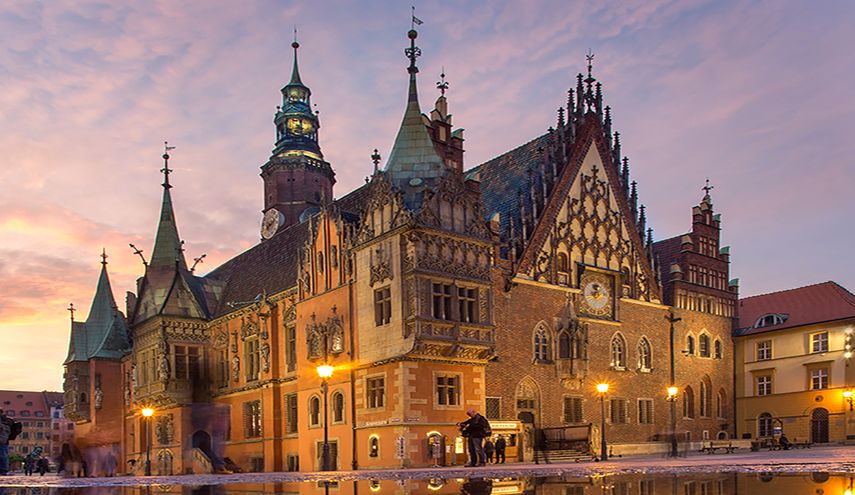
Wroclaw, Poland.
WPM UMW
Poznan, Poland.
Visit Poznan
Europe is full of great destinations, and it’s time to plan a trip to Poland, where rich culture, history, beautiful architecture, unique cuisine, and diverse natural landscapes stand out.

Although it’s sometimes considered an underrated vacation spot, Poland ranks among the top 20 countries for tourist arrivals, demonstrating significant and growing visitor numbers.
By visiting the Polish National Tourist Office website, available in several languages, we can learn about this European country where history, culture and nature come together.
You can even download brochures (PDF) by cities, culture and arts, wild nature, castles and palaces, health resorts and spas, tastes of the country, etc.
Anyway, let’s visit the Polish National Tourist Office website.
After checking the online platform’s header, with inspiration, news, and top attractions, let’s look into Poland’s 16 regions by clicking on the country’s map provided.
This is fun. You can click as many regions as you want. I clicked them all, and I decided to go for an off-the-beaten-track expedition as recommended: cities and surroundings of ód, Pozna, and Wrocaw.
Lodz: Located in the region of Lodzkie, we learn this Polish province has “an ever-growing number of tourist attractions, both natural and manmade.” Lodz is a multicultural and modern city with a fascinating industrial history that has recreated itself into a relaxed and creative, family-friendly destination, like the Manufaktura arts center, shopping mall, and leisure complex, which is the direct result of Poland's largest renovation project since the reconstruction of Warsaw's Old Town in the 1950s. There are many restaurants and bars, many of them located along architecturally pleasing Piotrkowska Street, one of the longest commercial thoroughfares in Europe, with a length of around 4.2 km. There are parks and numerous museums recasting its story in imaginative and interesting ways.
Poznan: This is the capital city of the province of Wielkopolska, where you can find many valued historical sites, castles, and palaces as well as Poland’s first capital city, Gniezno. Pozna revolves around its charming Old Market Square, featuring colorful merchant houses and historical buildings like the Town Hall, alongside Gothic, Baroque and Renaissance buildings with vibrant restaurants, cafes, and cultural activities, making it a historically significant and authentic Polish destination. Here The National Museum in Poznan, one of Poland's main branches of the National Museum system, boats a rich collection of Polish painting from the 16th century on, and a collection of foreign artworks.
Wroclaw: Home to a variety of architectural marvels, the province of Dolnolskie includes mountains, two national parks, and the greatest number of health spas in Poland. Wroclaw is the bustling regional capital, with several architectural landmarks as the best examples of Brick Gothic and Baroque architecture in the country. Antoniego Street is only 289 meters in length, but it’s full of restaurants and bars and it’s located close to Market Square in Old Town. Here the National Museum holds one of the largest collections of contemporary art in the country.
Time to Visit
Spring (March to May) and fall (September to November) offer pleasant weather and fewer crowds, while summer (June to August) is the most popular time to visit.
Winter can be cold and snowy, but beautiful as well.
How to get to Poland?
Multiple airlines fly from metropolitan areas in the United States to Warsaw, including LOT Polish Airlines from Chicago, Los Angeles, Miami, Newark, and New Yor City.
If you carry a US passport you do not need a visa for up to 90 days, but if you travel with a document from another origin, please contact your local Polish consular office to have appropriate information.
Getting Around
Poland has a well-developed public transportation system, including trains, buses, and trams, making it easy to travel between cities and regions.
Language
Polish is the official language, but English is widely spoken and understood in many cities and tourist destinations.
You may want to pay respect by learning and keeping handy a couple of Polish phrases to greet people, like “Dzie dobry” (en DOH-bry) for Good Morning or “Przepraszam, czy mówisz po angielsku?” (psheh-PRAH-shahm, chee MOO-veesh poh ahn-GYEL-skoo?) for I´m sorry, do you speak English?
Where to Stay
This European country has a wide array of accommodation options for all budgets. From five-star hotels in several cities to boutique hotels, hostels, and apartments.
Keep in mind Poland is one of the most affordable countries in Europe. You can find very budget-friendly options for food, accommodation, transportation, and activities.
Currency
Even though Poland is a European Union member, the zoty is still the official currency and legal tender of the country. It is subdivided into 100 groszy (gr), like cents are to a dollar, and it’s pronounced zwt.
Follow these tips to save money. DO NOT EXCHANGE MONEY, neither before traveling nor at your destination. Most travelers tend to exchange dollars, ignoring the often-excessive fees they are charged.
It's better to deposit your money in your bank account and use your ATM card as soon as you arrive at your destination. The issuing bank will charge you three or four dollars, but you'll save the exchange fee and get the best international rate available.
You can also use credit cards in stores, restaurants, and hotels.
Descarga LA APP