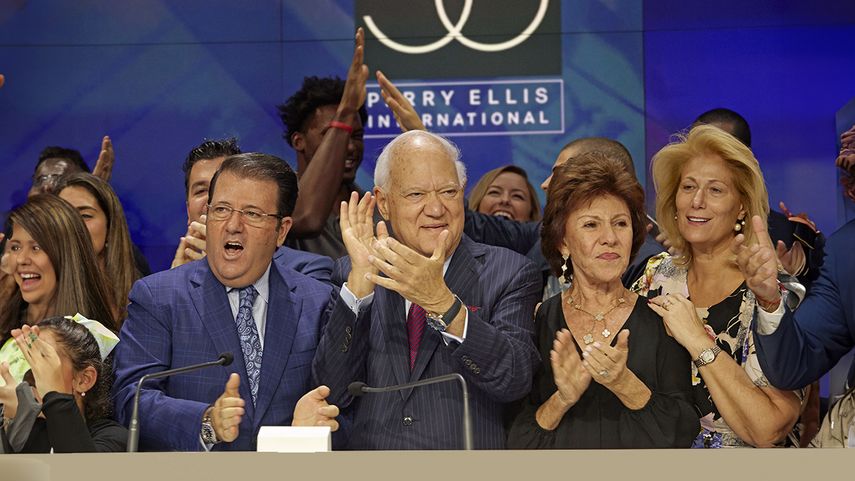
There are countless examples of people who reinvent themselves to achieve success, and George Feldenkreis—founder and former CEO of the Miami-based apparel company Perry Ellis International—is one of them. That is why Emmy Award–winning filmmaker Jerry Levine brings the inspiring story of this Miami business icon to the big screen with his documentary From Cuba to America, presented at the Miami Jewish Film Festival.
The film, which features prominent figures such as musician and producer Emilio Estefan and the famous fashion designer Tommy Hilfiger, among others, covers defining chapters of George’s life: his childhood as a Jewish boy in Cuba, born to Ukrainian parents; the political circumstances that forced him to emigrate in 1961; his beginnings, growth, and rise in the United States; as well as challenging moments of reinvention.
DIARIO LAS AMÉRICAS spoke with the filmmaker about the making of the documentary and the message behind the story.
-You have built a distinguished career as a filmmaker, documentary producer, investigative reporter, and news anchor, engaging deeply with the stories you tell. How do you personally interpret the life story of George Feldenkreis, and what resonated most with you as a storyteller?
It’s rare to meet someone who built a global public company and is still willing to speak with genuine vulnerability on camera. George was remarkably open. He spoke about fear, loss, regret, faith, and doubt — not just success. What stayed with me most was how personal his reflections were. He didn’t present a polished public narrative; he spoke as a man looking back on a full life. Many of the things he shares in the film are not things people outside his family had ever heard before. That honesty gave the story real gravity, and it’s what makes the film feel intimate rather than institutional.
-Your documentary From Cuba to America revisits many defining moments of George Feldenkreis’s life: his childhood as a Jewish boy in Cuba, his role as an appointed asset-forfeiture attorney following the Cuban Revolution in 1959, and the political circumstances that forced him to leave the island in 1961. How did these early experiences shape his character, worldview, and eventual business career?
George grew up in a poor Jewish household in Havana, but pre-revolutionary Cuba also provided him with opportunities that would have been difficult to access elsewhere. Scholarships helped him attend law school, and the Jewish community he was raised in was deeply rooted in faith, education, and pride in Jewish history. What makes his story especially rare is that he had direct, first-hand exposure to the early days of the Cuban Revolution. He was appointed to carry out legal work on behalf of the new government and personally encountered Fidel Castro. That experience gave him an early and unfiltered understanding of how quickly idealism can turn into coercion. It shaped his worldview permanently and deeply informed him of the decisions he made for the rest of his life.
-Feldenkreis’s journey is marked by tenacity, vision, and philanthropy. He founded several successful ventures and earned respect as a civic leader, with Perry Ellis International emerging as the crown jewel of his career. Through economic volatility and the challenges of international trade, he managed not only to endure but to thrive. What lessons can entrepreneurs and leaders draw from his experiences?
George experienced extreme highs and extreme lows. He faced bankruptcy, lost control of companies he helped build, and was even fired from his own enterprise. Many people would have seen that as the end of their professional life. Instead, he rebuilt — at an age when most people are retiring. He took risks again in his eighties, re-entered the business world, and ultimately reshaped the final chapter of his career. His story is a reminder that resilience, clarity of purpose, and the willingness to keep moving forward can matter more than timing, age, or circumstances.
-Even competitors such as Tommy Hilfiger have praised Feldenkreis, noting: “George was a survivor. He never gave up. He continued to dream big and pushed forward.” How significant is this recognition from peers in understanding his legacy within the fashion industry and beyond?
George was admired because he truly built something from nothing. He arrived as an immigrant and went on to create a global apparel company headquartered in Miami. He didn’t inherit his success — he earned it. Having someone like Tommy Hilfiger speak about him matters because it situates George within the broader American design and business community. It acknowledges that what he built was not only commercially successful, but culturally significant.
-Jacob Solomon, President and CEO Emeritus of the Greater Miami Jewish Federation, once remarked, “I didn’t know about Cuban Jews when I first came to Miami,” while praising their deep commitment to community, Israel, and Jewish faith. Do you believe George Feldenkreis’s story also serves as an entry point to better understanding Jewish identity and culture?
George’s life intersects with many of the most defining chapters of modern Jewish history — the Holocaust era, the founding of Israel, and the transformation of Miami into a major center of Jewish life. His story offers a window into how Jewish identity adapts across countries, languages, and political systems while remaining rooted in tradition. Today, Miami has become one of the most vibrant Jewish communities outside of Israel. Cuban Jews were a significant part of that transformation, and George’s story helps illuminate how that community helped shape the city we know today.
From Cuba to America
Saturday, January 24th, 7:30 pm, at Miami Theater Center.
Monday, January 26 at 7:30pm, at Temple Menorah.
Wednesday, January 28 at 7:30pm, at Michael-Ann Russell JCC.
Visit www.miamijewishfilmfestival.org for tickets and more information.