Introduction
viernes 25
de
septiembre 2026


Every transition strategy faces a permanent tension between political urgency and institutional sustainability
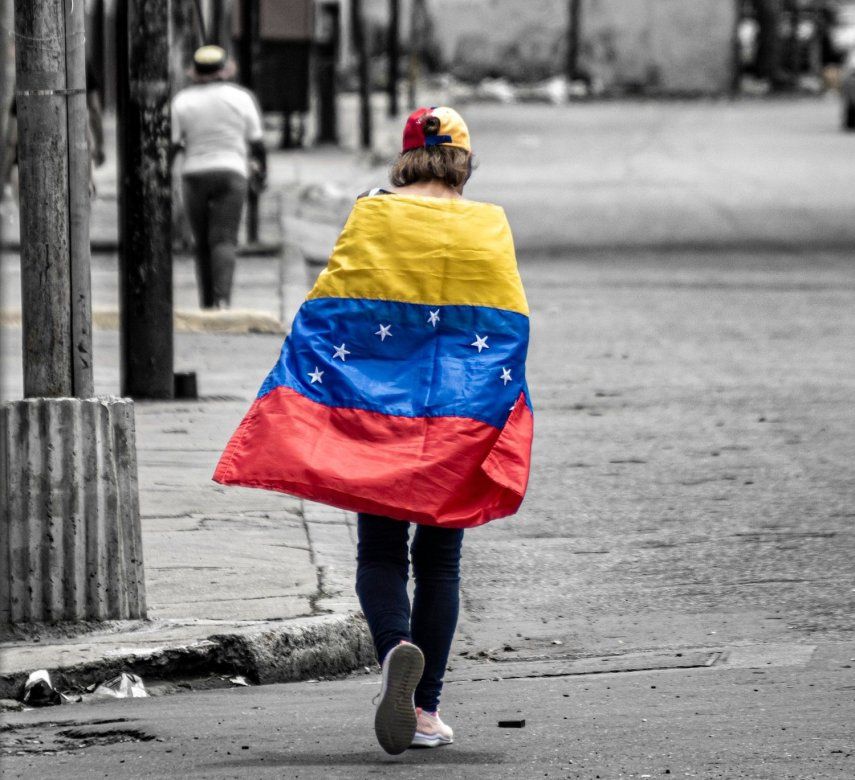
Imagen referencial.
unsplashIntroduction

There is a narrative that has been repeated so often in certain political, academic, and media circles that it has acquired the appearance of truth: “Venezuela is not ready for elections.” The phrase is usually presented as a technical conclusion, when in reality it constitutes a simplification of a much more complex crisis. The Venezuelan problem, despite successive frauds and manipulation of the vote, has never been exclusively electoral. It has been, and continues to be, a problem of power, institutional capacity, and, above all, control of the State.
Venezuelans have already demonstrated that they are ready to vote. They did so once again on July 28, 2024, when millions of citizens went to the polls convinced that the vote remained the legitimate instrument for expressing popular sovereignty. That day confirmed the existence of a citizenry committed to democracy and the operational capacity to conduct an electoral process. The subsequent debate did not revolve around the material possibility of voting, but around a much more consequential question: whether the will expressed by citizens would be respected by those who effectively exercised power.
That distinction is not minor, since organizing an election is one thing; ensuring that its results produce a real transfer of political power is quite another. Robert Dahl warned that a democracy is not defined solely by the existence of elections, but by the effective possibility that the will of citizens determines who governs. When that condition disappears, the election loses part of its democratic function and becomes an insufficient mechanism for resolving the struggle for power.
Precisely therein lies the error in much of the international debate about Venezuela. For years, the discussion has focused on electoral calendars, international observation, and voting conditions, while the real core of the problem remained virtually untouched. The Venezuelan crisis cannot be understood solely through electoral political science; it must also be analyzed through the theory of the State, national security, and democratic governance.
The Modern State and the Monopoly of Force
The modern State rests on an essential principle formulated by Max Weber: “the legitimate monopoly of force.” This monopoly is not a privilege of the government of the day; it belongs to the State and is exercised in accordance with the Constitution through professional institutions responsible for ensuring security, public order, and national defense. When these institutions cease to respond primarily to the general interest and begin to serve a political project, the rule of law begins a process of progressive degradation. That is precisely what has happened in Venezuela over the past two decades. The crisis did not begin with an electoral conflict, nor will it end solely through another election, because institutional deterioration has resulted from a prolonged process of capture of the State apparatus, especially those institutions responsible for exercising the legitimate monopoly of force—namely, the Bolivarian National Armed Forces, intelligence agencies, and police forces—which have been progressively institutionally captured over a period spanning a little more than two decades.
However, even that explanation is now insufficient. Speaking only of “institutional capture” describes the phenomenon, but does not fully explain its true dimension. What has happened in Venezuela has evolved into a much more complex model that transcends classical authoritarianism and requires the incorporation of new analytical categories. Rather than simply a captured State, Venezuela exhibits features of a hybrid governance system, in which formal institutions coexist with informal networks of political, economic, military, and criminal power that interact, protect one another, and condition the functioning of the State itself. Under this model, certain organizations cease to operate merely outside the law and become functional components of the system of power.
Hybrid governance represents a profound transformation of the State. It is no longer merely a matter of administrative corruption, nor exclusively of political authoritarianism. A web is formed in which state actors, illicit economic networks, security structures, and criminal organizations develop cooperative relationships that ultimately alter the very nature of public institutions, with the consequence that the State ceases to act fully in accordance with the principle of legality and begins, in certain areas, to respond to parallel interests that compete with the constitutional order. Understanding this transformation is essential to correctly interpreting the Venezuelan crisis. Consequently, as long as the debate remains focused exclusively on holding elections, the essential question will remain unanswered: who really controls the coercive power of the State, and under what principles is it exercised? Answering that question is the starting point for any serious democratic transition. Elections can renew governments, but only institutional reconstruction can recover the State.
From a Change of Government to the Reconstruction of the State
If the objective of the international community, particularly the United States of America, is truly to facilitate a democratic transition in Venezuela, followed by free elections and a stable process of governance, then one aspect cannot remain relegated to the background: recovering the legitimate monopoly of force and rebuilding the security sector.
Every democratic transition entails a redistribution of political power. However, when that power has been sustained for years by progressively captured institutions, the mere holding of elections is insufficient to guarantee the stability of the new order. Historical examples demonstrate that numerous transitions have failed not because of a lack of electoral legitimacy, but because the coercive structures of the State remained intact or continued to respond to centers of power other than the new democratic authorities.
Therefore, the discussion about Venezuela cannot be limited to who will govern the country. It must also answer a much more important question: how can we guarantee that the State once again responds exclusively to the Constitution and not to political, economic, or criminal interests? The answer requires profound security-sector reform, creating the conditions for governability. This entails restoring the professional character of the Armed Forces and police forces, reviewing their doctrines of employment, strengthening democratic civilian-control mechanisms, and restoring the constitutional principle that armed institutions serve the Nation and not a particular political project. This statement deserves a clarification that is frequently omitted from public debate: every professional military officer is, by definition, a public servant. Their mission is to implement public security and defense policies approved by legitimately constituted civilian authorities. This makes the military institution an actor of the State, but never a partisan political actor, as Articles 328 and 330 of the Constitution of Venezuela clearly establish.
Article 328 states: “The National Armed Force constitutes an essentially professional institution, without political affiliation, organized by the State to guarantee the independence and sovereignty of the Nation and ensure the integrity of the geographical space, through military defense, cooperation in maintaining internal order, and active participation in national development, in accordance with this Constitution and the law. In the performance of its functions, it serves the Nation exclusively and under no circumstances any person or political faction. Its fundamental pillars are discipline, obedience, and subordination. The National Armed Force is composed of the Army, Navy, Aviation, and National Guard, which function integrally within the framework of their respective competencies to fulfill their mission, with its own comprehensive social-security system, as established by its respective organic law.” Article 330 states: “Members of the National Armed Force on active duty have the right to vote in accordance with the law, but may not run for elected office, nor participate in political propaganda, political affiliation, or political proselytism.”
There is a fundamental difference between being a political actor and being a partisan actor. Every State institution participates in the implementation of public policies and, in that sense, performs a political function in the classical meaning of the term: it serves the general interest. But that responsibility disappears when the institution abandons its constitutional neutrality and begins to identify with an ideological project or a particular group.
Precisely for that reason, the participation of institutional military officers retired in opposition to the de facto regime, within a potential transition process, when it truly begins, does not constitute a democratic anomaly; on the contrary, it represents a strategic necessity. They are the ones who understand the internal functioning of the military organization, its capabilities, weaknesses, command procedures, and the reforms necessary to restore its professional nature. This is particularly important for a retired military sector whose careers spanned the Armed Forces before 1999 and the National Armed Force during at least a substantial part of the last twenty-seven years of institutional capture and destruction. These professionals, with specific profiles and characteristics demonstrated through their initiatives in favor of the reinstitutionalization of the Armed Forces and the recovery of democracy, must possess institutional clarity regarding the defense sector and knowledge of the gradual process of institutional capture. Their incorporation does not imply militarizing politics; quite the contrary, it means making use of indispensable technical knowledge to rebuild institutions whose mission will be to guarantee democratic stability for decades to come.
Transitional Justice and Institutional Differentiation
Alongside this institutional reform, a serious process of transitional justice must be developed. International experience demonstrates that no democracy can be consolidated on the basis of impunity, but neither can it be consolidated through the indiscriminate application of collective responsibility.
First indispensable condition: differentiate.
Not all public officials, police officers, or members of the military have the same degree of legal or moral responsibility. There is an obvious difference between those who simply performed institutional duties and those who actively participated in serious human-rights violations, drug trafficking, systemic corruption, terrorism, or organized crime. Differentiation is precisely the foundation of all legitimate transitional justice.
On the basis of this distinction, it will be possible to develop processes of investigation, institutional vetting, and individual accountability compatible with the rule of law. In parallel, Venezuela must design a comprehensive Disarmament, Demobilization and Reintegration (DDR) program, accompanied by strategies to dismantle armed organizations and reintegrate those who, without having committed serious crimes, can return to institutional and civilian life under strictly legal conditions. Care must be taken: this is not merely about removing weapons from circulation; it is about recovering effective control of the territory, eliminating parallel structures of coercion, rebuilding citizens’ trust in institutions, and ensuring that the legitimate monopoly of force once again belongs exclusively to the democratic State.
All of this requires planning, experience, and specialized knowledge. For that reason, when the transition begins—whose most relevant indicator is the unconditional release of civilian and military political prisoners, without prejudice to those initially released and while guaranteeing the full release of military personnel deprived of liberty for political reasons—it becomes relevant to design a sustainable transition. Such a transition cannot be composed exclusively of political leaders, but rather of broad sectors of society committed to recovering democracy, institutions, the rule of law, and the Republic itself.
The Reconstruction of the State: A Technical as Well as Political Challenge
The reconstruction of the State constitutes a technical as well as political challenge. Without this technical component, any agreement risks becoming a temporary arrangement incapable of transforming the structural causes that gave rise to the crisis.
Democracy is not strengthened merely by holding elections. It is strengthened when institutions recover their independence, when the public security forces once again become fully subordinate to the constitutional order, and when citizens know that the State will protect their rights regardless of political affiliation.
That is the true meaning of a sustainable democratic transition. It does not consist merely of changing a government. It consists of rebuilding the Republic.
The Warning: A Transition Without State Reconstruction Risks Failure
Every transition strategy faces a permanent tension between political urgency and institutional sustainability. The temptation to prioritize immediate agreements is understandable: stopping confrontation, reducing conflict, and opening spaces for negotiation. However, history has demonstrated that short-term stability does not always produce lasting peace.
The negotiation process currently promoted under the auspices of the United States, which began with a very poor public image, compounded by the fact that the first meeting did not actually take place, and in which the de facto regime issued a brief and disappointing communiqué that does not even contemplate the demands of the Quito Contact Group of March 2019 concerning the need to agree on an electoral roadmap and a peaceful exit, is even more problematic considering that at that time in-person elections such as those of July 28, 2024 had not even taken place. Those elections revealed an overwhelming and historically unprecedented victory for Venezuela’s legitimate opposition. To make matters worse, Nicolás Maduro had not been removed to face international justice, consequently producing an absence which, according to Article 233 of the Constitution, constitutes an absolute absence. These circumstances demonstrate, on the part of the interim de facto regime, clear intentions not to be willing to negotiate a democratic transition, as established by the three-phase plan of the Donald Trump administration.
Therefore, in light of these signals, we must remain extremely attentive, because there is a strategic risk that should not be underestimated: believing that a change of government is, by itself, equivalent to the recovery of the State. These are not equivalent processes. Governments change through political agreements or elections. States are rebuilt through profound institutional reforms.
If the criminal structures of hybrid governance remain intact, they will retain the capacity to adapt to any political scenario. They will change their methods, modify their alliances, and seek new mechanisms of influence, but they will preserve a substantial portion of the capabilities accumulated over years. International experience demonstrates that hybrid organizations rarely disappear when political leadership changes; they normally evolve, reorganize, and seek to preserve their spheres of power within the new institutional order.
From a prospective perspective, this poses at least four strategic risks.
The first is the survival of parallel centers of power. As long as networks capable of combining political, economic, military, and criminal resources persist, any democratically elected authority will govern under constant pressure from actors who never truly relinquished control of the State.
The second risk is the reversibility of the transition. No political agreement can become consolidated when those who retain coercive capacity preserve intact their instruments of intimidation, corruption, or violence. Under such circumstances, democratic institutions are born conditioned, and stability becomes subject to an extremely fragile equilibrium.
The third risk transcends Venezuela’s borders. If Washington prioritizes only immediate political-stability objectives without simultaneously promoting a strategy aimed at dismantling hybrid criminal structures, the continuity of the process could depend excessively on U.S. political cycles. A change of administration or strategic priorities could leave the most important reforms unfinished and open spaces for a recomposition of the factors that currently threaten Venezuelan institutionalism.
The fourth risk directly affects the security architecture of the Western Hemisphere. Venezuela is not an isolated phenomenon. Its geographic location, status as an energy-producing country, extensive Caribbean coastline, and land borders make it a point of enormous importance for regional stability. If hybrid governance networks remain operational, they will continue projecting effects onto transnational organized crime, drug trafficking, illegal mining, arms trafficking, forced migration, and other threats that extend far beyond the national sphere. Consequently, an incomplete transition would not represent merely a Venezuelan problem; it would constitute a permanent challenge to continental security.
Precisely for this reason, democratic consolidation requires a long-term strategic vision. Holding elections is an indispensable milestone, but not the endpoint. True success will depend on the ability to rebuild institutions, recover the legitimate monopoly of force, restore the rule of law, and dismantle the structures that made the progressive capture of the Republic possible.
Comparative experience demonstrates that democracies fail when they confuse the replacement of a government with the transformation of the State. Weak institutions are once again captured by those who retain sufficient power resources to condition them.
Venezuela now has a historic opportunity to break this cycle.
Venezuelans have already demonstrated that they are ready to vote. They did so with civic spirit, determination, and a clear democratic vocation. The question that remains open no longer concerns the citizenry. It concerns the institutions, national political actors, and the international community.
Is there really a willingness to build a transition that recovers the State, or is the objective merely to manage a new stage of the same problem?
The answer to that question will determine not only Venezuela’s political future, but also the democratic stability of a large part of the hemisphere for decades to come. Because democracy does not begin on the day electoral results are announced. It begins when power is once again subject to the Constitution, when institutions once again serve the Republic, and when no citizen has to wonder whether their vote will be respected.
Venezuela is indeed ready to vote, as it demonstrated broadly on July 28, 2024, even in the face of the entire machinery and repressive power of the State.
The real challenge, then, is to understand that everyone else must be prepared to accept the result and, above all, to rebuild the State that will make it possible for that sovereign decision to finally become a stable, governable, and lasting democracy.
Conclusions
Venezuela is ready to vote. It demonstrated this when millions of citizens peacefully went to the polls to exercise a right that belongs to the very essence of democracy. The real unknown has never been the Venezuelan people’s capacity to vote. The true test is whether the institutions, political actors, and international community will be willing to rebuild a State in which the legitimate monopoly of force once again serves exclusively the Constitution, the law, and the citizens. Because elections change governments; only institutions rebuild republics.
Bibliography
Dahl, Robert A. Polyarchy: Participation and Opposition. Yale University Press, 1971.
Diamond, Larry. The Spirit of Democracy: The Struggle to Build Free Societies Throughout the World. Times Books, 2008.
Huntington, Samuel P. The Third Wave: Democratization in the Late Twentieth Century. University of Oklahoma Press, 1991.
Linz, Juan J., and Alfred Stepan. Problems of Democratic Transition and Consolidation. Johns Hopkins University Press, 1996.
O’Donnell, Guillermo, Philippe C. Schmitter, and Laurence Whitehead (eds.). Transitions from Authoritarian Rule: Prospects for Democracy. Johns Hopkins University Press, 1986.
Weber, Max. Politics as a Vocation. 1919.
Carter Center. Report of the Expert Mission on the 2024 Presidential Election in Venezuela. Atlanta, 2024.
Thomas C. Bruneau and Florina Cristiana Matei, on security sector reform.
United Nations, Integrated Disarmament, Demobilization and Reintegration (DDR).
Constitution of the Bolivarian Republic of Venezuela.
Descarga LA APP